Markets
Busan
markets
Busan grew up around its markets. The country's biggest fish market on the water, a post-war maze in Nampo, a night market that lights up after dark, and the plaza that made seed hotteok famous. Six markets, and what to eat at each.
-
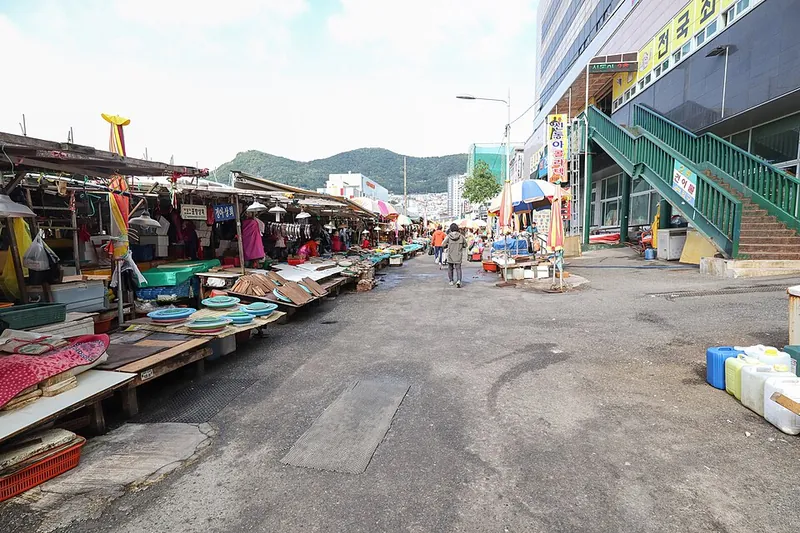
Jagalchi Market 자갈치시장
Jung-gu · Line 1 JagalchiKorea's largest seafood market, spread along the Nampo waterfront. Downstairs, tanks of live fish and shellfish; upstairs, stalls that slice what you pick into hoe or grill it on the spot. The fishmongers, the Jagalchi ajumma, are a Busan institution.
Tip Live seafood is priced by the fish, not the plate. Agree on the price before it is cut.
More in Seafood -
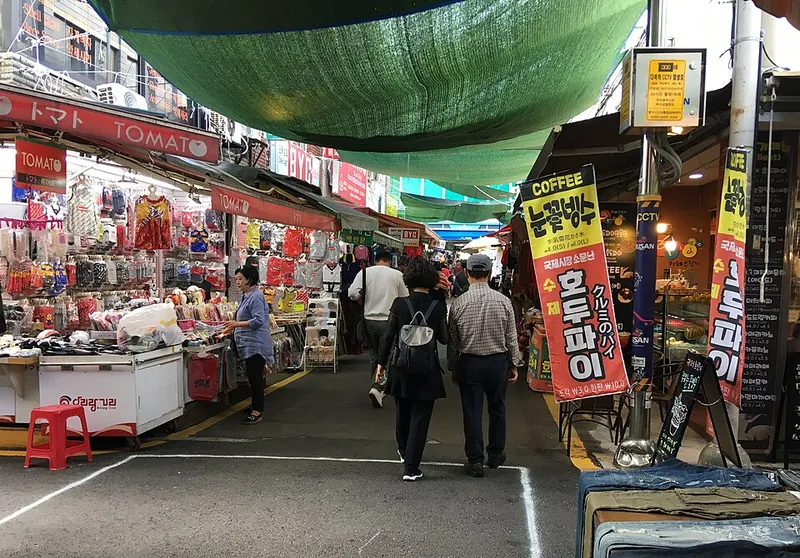
Gukje Market 국제시장
Jung-gu · NampoA sprawling maze of alleys that grew out of the markets of the Korean War, selling clothes, fabric, tools, kitchenware and street food. It gave its name to the 2014 film Ode to My Father.
Tip Bring cash and small bills, and pick an alley landmark so you can find your way back out.
More in Areas -
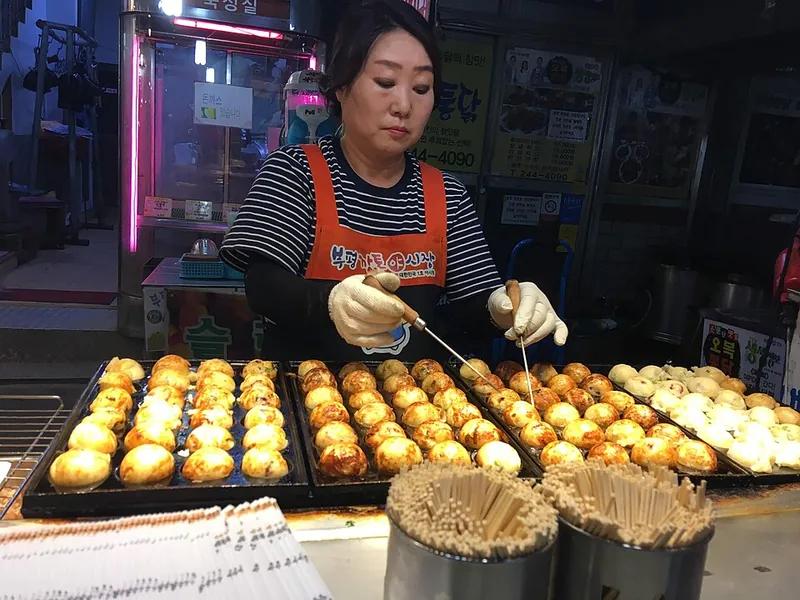
A night-market food stall Bupyeong Kkangtong Night Market 부평깡통야시장
Jung-gu · NampoOne of Korea's best-known night markets, right beside Gukje. The name kkangtong, tin can, recalls the post-war trade in canned goods; today the draw is the food stalls that light up after dark.
Tip The night food stalls are the point. Come in the evening, come hungry, and bring cash.
More in Areas -
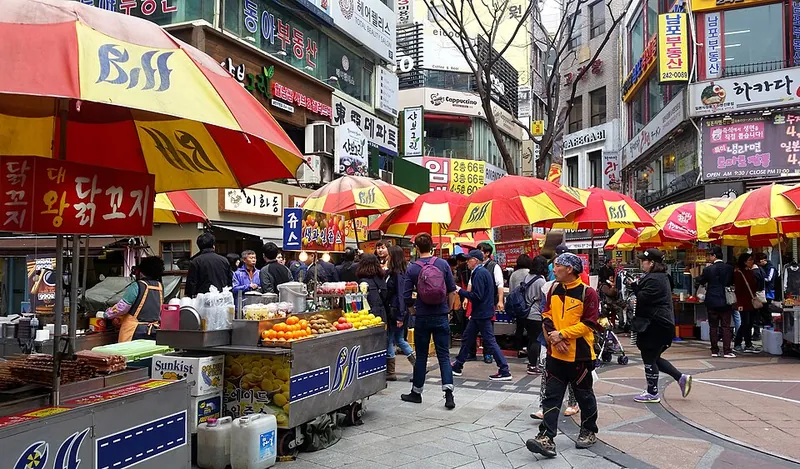
BIFF Square 비프광장
Jung-gu · NampoThe street-food plaza next to Gukje Market, named for the Busan International Film Festival and set with stars' handprints. It is the home of ssiat hotteok, the seed-stuffed street pancake.
Tip Ssiat hotteok is the thing to try. Expect a short line at the busiest griddles.
More in Areas -
Bujeon Market 부전시장
Busanjin-gu · SeomyeonOne of Busan's largest traditional markets, in the heart of the Seomyeon downtown: produce, dried goods, herbs and a busy food alley, used more by locals than by tourists.
Tip A working market. Mornings are busiest and freshest, and many stalls take cash only.
More in Areas -
Gupo Market 구포시장
Buk-gu · Line 3 GupoA historic traditional market on the Nakdong River side of the city, long tied to Gupo guksu, the local wheat-noodle heritage. Further from the tourist trail, and quieter for it.
Tip Pair it with a bowl of the local noodles, and go for the everyday-Busan feel rather than souvenirs.
More in Eats
Shopping a Korean market
- Carry cash in small bills. Many stalls do not take cards, and small notes make the change easier.
- For live seafood and hoe, settle the price before anything is cut or cooked; it is charged by weight or by the fish.
- Bargaining is fine and friendly for clothes and dry goods, less so for food stalls with set prices.
- Hours vary by stall and market. Day markets are best in the morning; night markets run in the evening.
Markets are living, changing places; opening days, hours and prices shift, so confirm before a special trip. Last updated September 2026.