FAQ
Things
visitors ask
Getting to Busan
-
How do I get to Busan from Seoul?
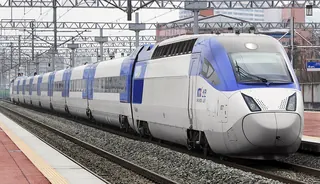
The KTX high-speed train is the default.
Seoul Station to Busan Station runs about 2.5 hours.
Book a seat on the KTX or SRT and you step off in the middle of the city.Full breakdown of trains, flights and the metro on our Getting there guide.
-
I'm flying into Incheon (ICN). How do I reach Busan?
Take the AREX train from the airport to Seoul Station, then the KTX straight down to Busan, roughly 2.5 hours on the train.
Some visitors instead take a short domestic flight to Gimhae.
Both routes are covered in /getting-there. -
Does Busan have its own airport?
Yes, Gimhae International Airport (PUS), with direct flights from Japan, China and Southeast Asia.
If you fly straight into Busan you skip the transfer from Seoul entirely.
Getting around
-
How do I use the Busan Metro?
Tap a transit card at the gate.
Busan has four metro lines, plus the driverless BGL and the coastal beach train, and they reach most of the sights a visitor wants.Line map and per-area routing on /getting-there.
-
What transit card do I need?
A T-money or Cashbee card.
Both are sold at any convenience store (CU, GS25, 7-Eleven), both work on Busan's metro and buses, and you top them up at any station or store register.More on convenience stores and getting around.
-
Does Google Maps work?
For driving and public transit, yes.
For walking directions, no, it is often just wrong here.
Korea restricts mapping-data exports, so Google's walking layer is incomplete.Use Naver Map or Kakao Map for anything on foot.
Both have English.
Entry & visa
-
Do I need a visa?
Probably not.
Around 110 nationalities can enter visa-free, with the length depending on the passport, usually 30, 60, or 90 days.Full list with the numbers in our Visa & K-ETA guide.
-
What about K-ETA?
If you are from one of the listed exempt countries (US, Canada, UK, the EU, Japan, Australia and more), you are K-ETA-exempt through the end of 2026, so there is nothing to do before flying.
If your country is visa-free but not on the exempt list, apply at k-eta.go.kr at least 72 hours before your flight.
See /visa. -
How long can I stay?
30, 60, or 90 days depending on your passport.
The exact number for each country is in the /visa guide.
Money & shopping
-
Cash or card?
Card, basically everywhere.
Even most street stalls take cards now.
Visa and Mastercard work without issues; American Express is hit-or-miss.Still, keep about ₩50,000 in small bills for traditional markets, temples, and the occasional cash-only spot.
-
How does the VAT refund work?
If you spend ₩15,000 or more in one go at a tax-refund store (look for the sticker on the door), ask for a tax-refund slip and show your passport.
Process it at a kiosk at Gimhae or Incheon airport before you fly out.
Full walkthrough on /tax-refund. -
Should I exchange currency before flying?
No, do not bother.
Rates at the airport and in Korea are usually better than back home, and most travelers skip cash entirely with a no-FX-fee card.
Staying connected
-
SIM, eSIM, or pocket WiFi?
An eSIM is the easiest if your phone supports it: set it up online before you land, no counter.
A physical prepaid SIM gets you a Korean number for KakaoTalk verification.
Pocket WiFi only makes sense for a locked phone or a group sharing one connection.Prices and the pickup map on /sim-wifi.
-
Where do I pick up a SIM?
At the airport arrivals hall, from KT / SKT / LG U+ counters, at Gimhae (PUS), or Incheon (ICN) if you connect through Seoul.
Or set up an eSIM online before you land and skip the counter.
Details on /sim-wifi.
Eating in Busan
-
Where do I find the seafood?
Jagalchi is Korea's largest fish market, and raw-fish (hoe) houses line the coast.
Our Seafood guide maps the Korea Post-picked raw-fish, mulhoe, eel and pufferfish spots. -
Do restaurants have English menus?
Bigger restaurants and tourist areas often do, and pointing at photos works nearly everywhere.
Our Eats guide lists each place's signature dish and menu so you can order with confidence, and the phrasebook covers the rest.
What to see
-
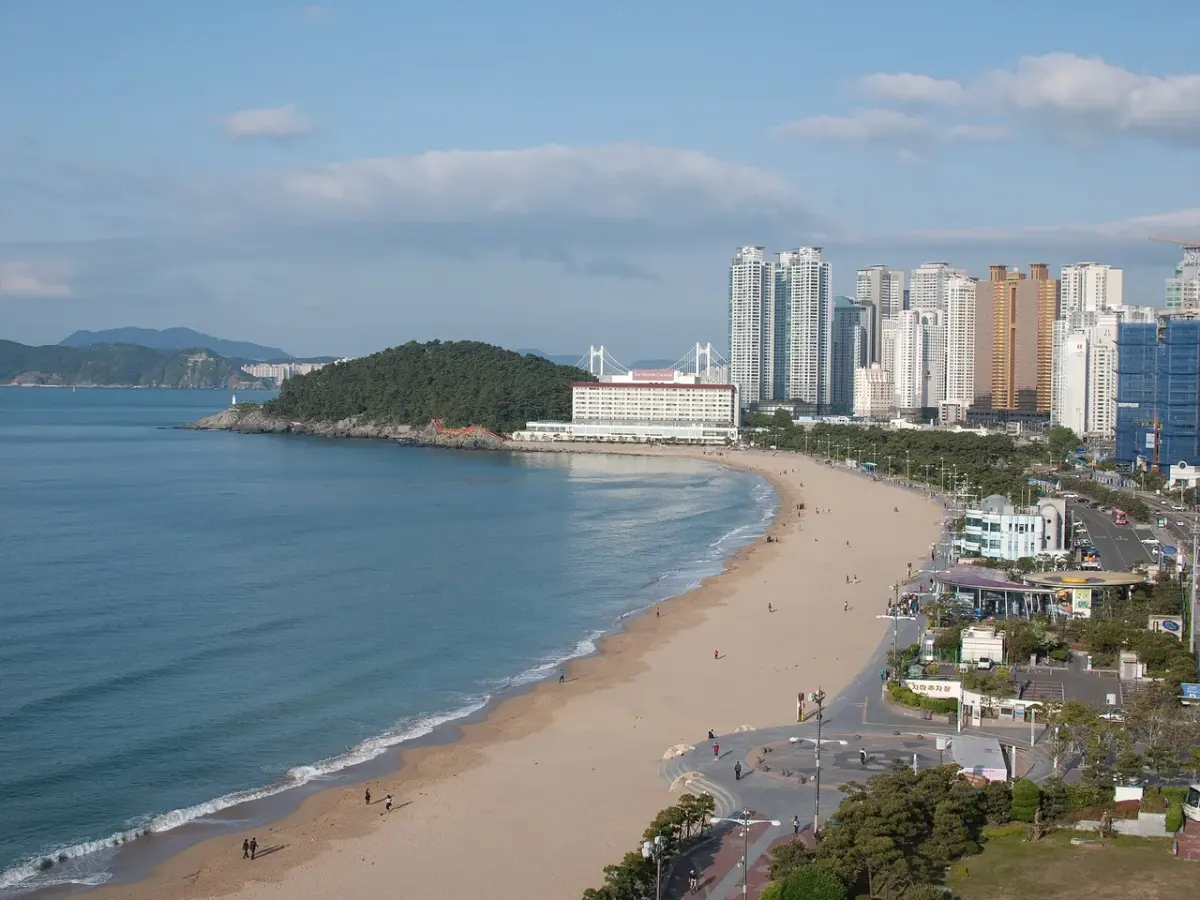
What are Busan's best beaches?
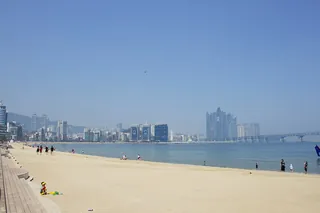
Haeundae and Gwangalli are the two headline beaches, both lined with cafes and lit up at night (Gwangalli looks onto the Gwangan Bridge).
More on the neighbourhoods in /areas. -
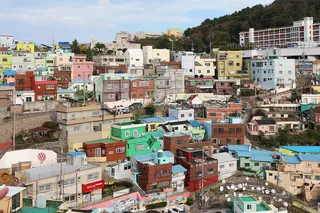
What is Gamcheon Culture Village?
A pastel hillside maze of stair-alleys, murals and small cafes, built up by refugees during the Korean War and now one of Busan's most photographed spots.
Find it and other sights in /sights. -
Any day trips from Busan?
Plenty.
Gyeongju, Tongyeong and Geoje are all within reach, and our food and sights sets reach across Gyeongnam and Ulsan too.
Start from /getting-there and /eats.
Etiquette & safety
-
Do I tip?
No, nowhere.
Service is built into the price, and leaving extra can just confuse the staff. -
Is Busan safe?
Very.
Violent crime is rare and it is comfortable to walk at night; normal city sense (watch your bag in crowds) is enough.
In an emergency, dial 112 for police or 119 for fire and ambulance. -
Any etiquette basics?
Take your shoes off in homes and some traditional restaurants, give and receive with two hands (or a hand on the forearm), and do not stand your chopsticks upright in a bowl of rice.
A small bow goes a long way.
Didn't find your answer?
Ask us on Instagram. @dealseoul, we read every message.Last updated September 2026.